by Suzanne Lieurance
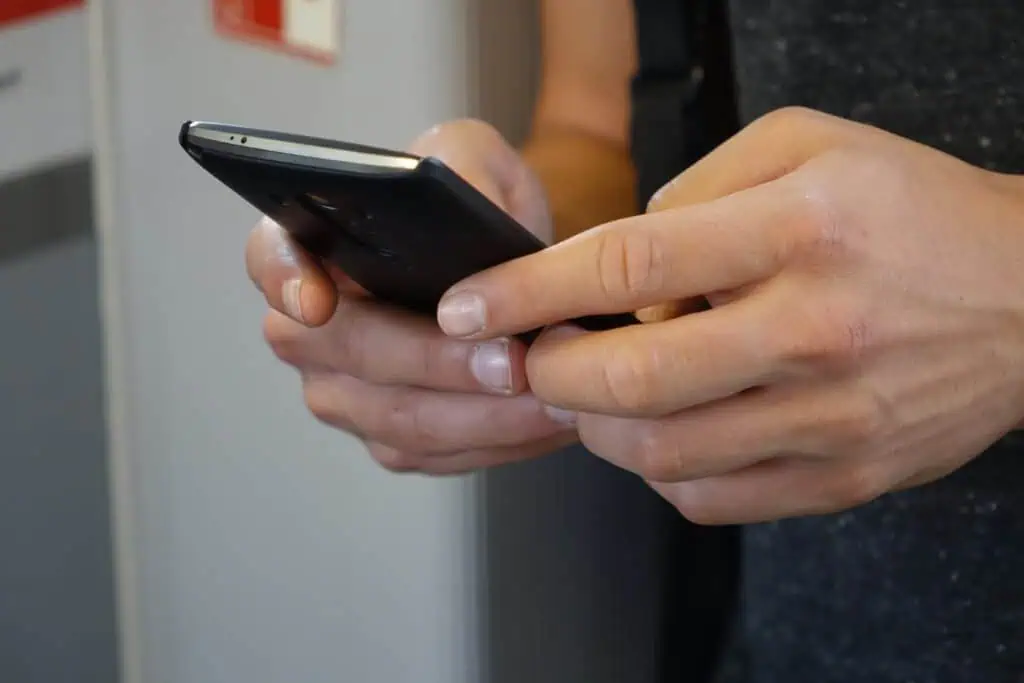
You can write anywhere now.
That’s one of the best things about being a writer today.
You’re not tied to a desk, a schedule, or even a computer.
You’ve got a full writing studio in your pocket.
And yet… that doesn’t mean your phone is the best place to write a book.
Many writers start there because it feels easy.
You’re waiting in line, sitting in the car, or lying in bed, and an idea hits.
You open your notes app and begin.
It feels productive.
It feels like you’re finally doing the thing.
But over time, something starts to feel off.
You’re writing, but you’re not building momentum.
You’re capturing words, but you’re not shaping a book.
At the same time, you’ve probably heard about writers who do write entire books on their phones.
And they finish them.
They publish them.
They make it work.
So, what’s the difference?
It’s not the phone.
It’s how the phone is being used.
Why Writing on Your Phone Doesn’t Work for Most Writers
Your phone is built for distraction, not depth.
Every app is competing for your attention.
Notifications light up.
Messages come in.
Emails refresh.
Even if you silence everything, you still feel that subtle pull to check something, just for a second.
Writing a book asks you to stay with an idea long enough to develop it.
That kind of focus doesn’t happen easily in a space designed to interrupt you.
Even when you think you’re ignoring distractions, your attention is still shifting in the background, which makes it harder to stay connected to what you’re writing.
Then there’s the screen itself.
You’re only seeing a few lines at a time.
You can’t easily step back and view the structure of what you’re creating.
Instead of building chapters, you start collecting fragments.
Instead of developing ideas, you jot them down and tell yourself you’ll come back later.
Most writers don’t come back in the way they expect.
They end up with pages of scattered notes that never quite turn into a finished manuscript.
Writing on your phone also keeps you in “quick capture” mode.
That’s great for ideas.
It’s not great for completion.
You grab a sentence here, a paragraph there, and it feels like progress.
But progress in a book comes from staying with the work long enough to shape it, refine it, and move it forward in a clear direction.
There’s another layer to this.
Your phone is where you consume.
You scroll, read, watch, and check in on everything happening around you.
When you try to write in that same space, your brain doesn’t fully switch into creation mode.
Even when you stay in your writing app, part of your attention is still wired for input, not output.
And because writing on a phone often happens in between everything else, finishing starts to feel optional.
You’re not sitting down with the intention of moving a project forward.
You’re fitting writing into the leftover spaces of your day.
That keeps your work in a constant state of “in progress,” which is another way of saying unfinished.
Why It Works for Some Writers
And yet, some writers do finish entire books on their phones.
They’re not doing anything magical.
They’re just approaching the process differently.
They treat their phone like a real writing tool, not a casual space.
When they open their writing app, they’re not just passing time.
They’re there to work.
They’ve trained themselves to go deep, even on a device that usually encourages quick, shallow interaction.
That comes from repetition.
They sit down, they write, and they stay with it long enough that their brain recognizes this as focused work.
They also remove distractions on purpose.
Notifications are off.
Apps are limited.
Sometimes they even write offline so nothing can interrupt them.
Instead of relying on willpower, they’ve changed the environment so focus becomes easier.
They work within a system.
They’re not scattering notes across different apps.
They’re building a manuscript.
That might mean writing in a dedicated app organized by chapters, dictating drafts and editing later, or syncing everything so they can review larger sections when needed.
They’re also comfortable writing in smaller windows of time, but they return to the same project consistently.
That consistency is what creates momentum.
And most important, they’ve already decided they’re finishers.
They’re not waiting for the perfect setup.
They’re not telling themselves they’ll get serious later.
They use what they have, and they follow through.
Here’s What This Means for You
You don’t need to stop using your phone.
It’s one of the best tools you have for capturing ideas, saving snippets, and keeping your writing close at hand.
But if you’ve been writing on your phone and not finishing, it’s worth looking at how you’re using it.
Are you building a manuscript, or collecting fragments?
Are you creating space for focus, or trying to write in between everything else?
Are you treating your writing time as something intentional, or something optional?
If you can bring focus, structure, and consistency to your process, you can write anywhere.
If you can’t, then changing your environment might be the simplest way to change your results.
Because becoming a writer who finishes isn’t about where you write.
It’s about how you show up to the work—and whether you stay with it long enough to bring it all the way to the end.
Now, be sure to read these other posts with tips to help you write your book:
Why Showing Up Consistently Matters More Than Writing a Lot
How to Write When You Don’t Feel Like It
And, if you aren’t already a subscriber, sign up now for The Morning Nudge to get writing tips and resources delivered to your e[mailbox every weekday morning – it’s free!

Suzanne Lieurance is the author of over 40 published books and a transformational Law of Attraction coach for writers who are ready to stop waiting to feel like the real thing. At Write by the Sea, she guides writers through the identity shift that changes everything — not just the writing, but the whole life built around it. She is the publisher of Manifesting Monthly and the host of Monday Morning Manifestors.